Angel’s Flight in Art
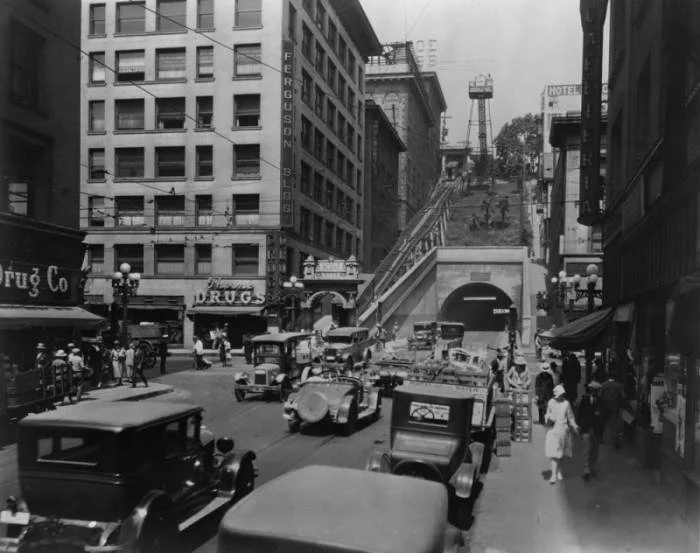
Angel’s Flight in the 1930s
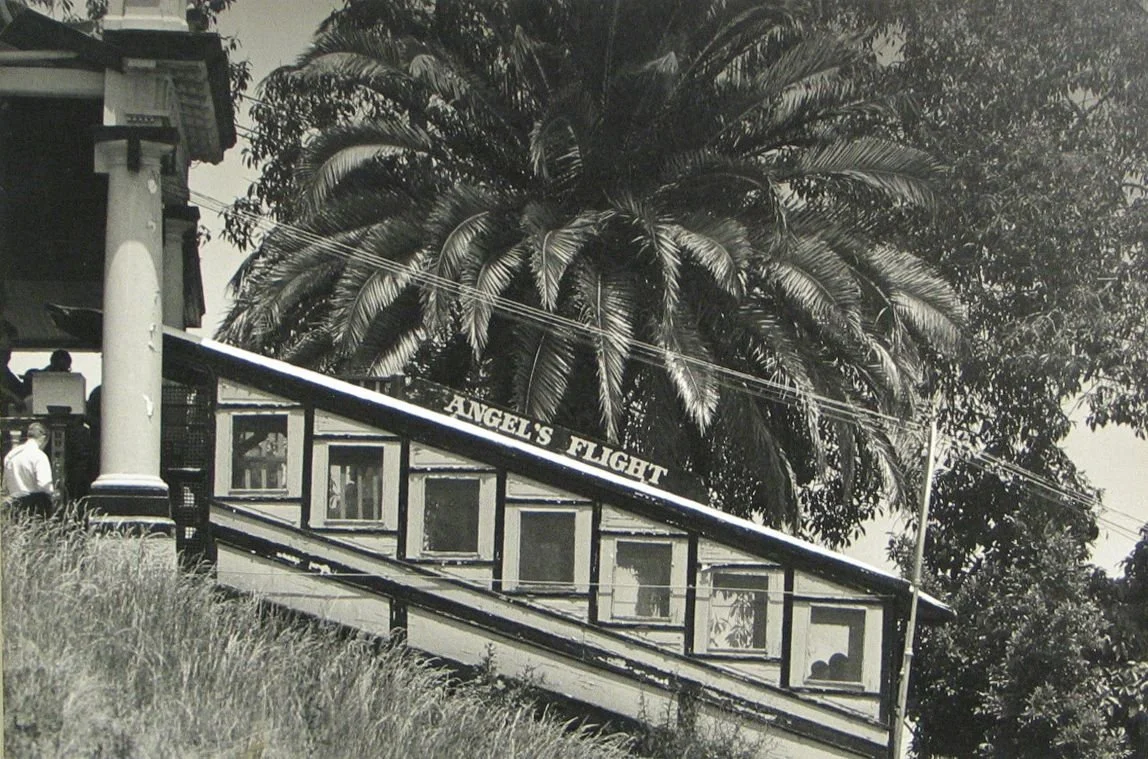
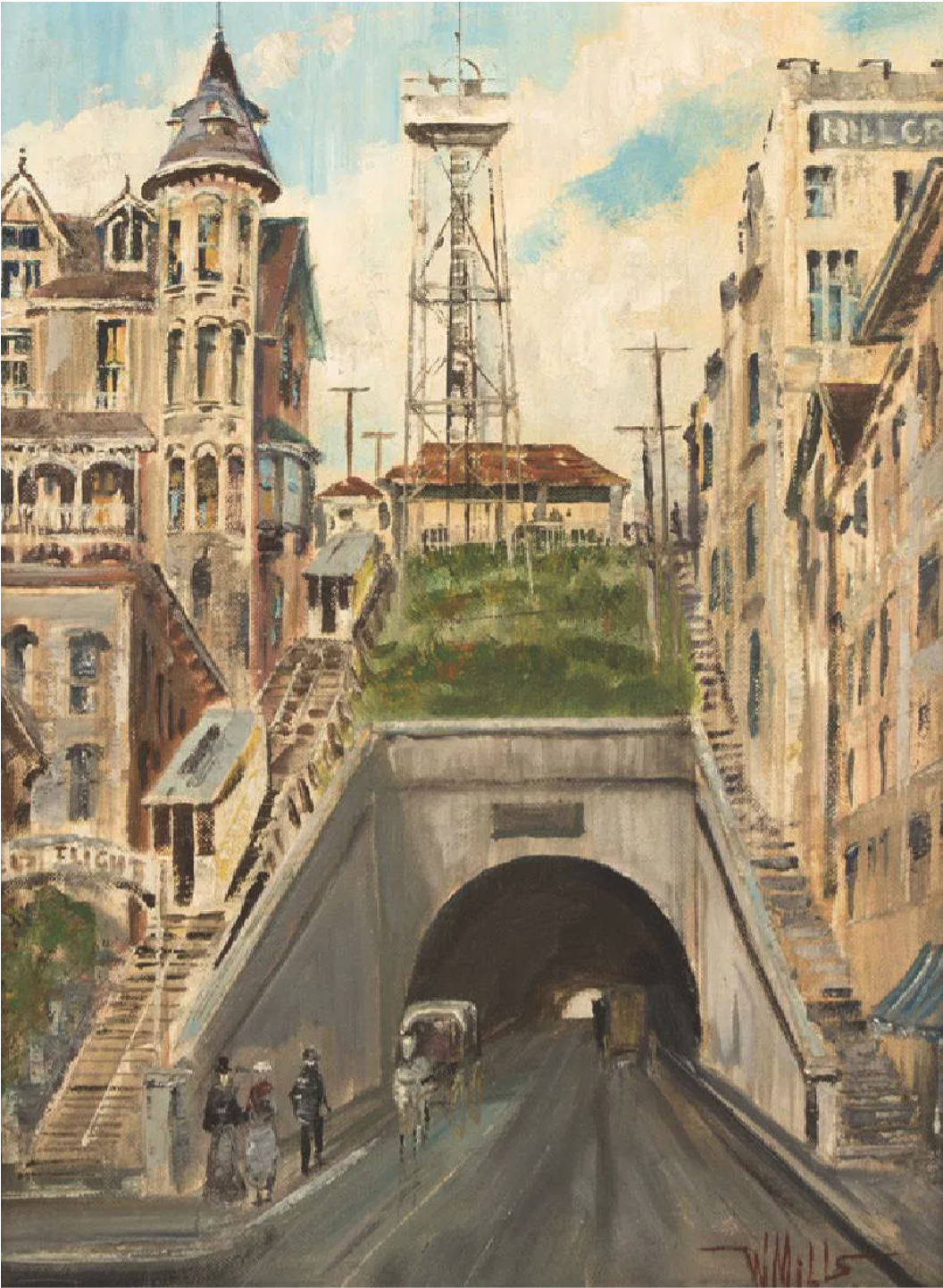
This December marks 125 years since Angel’s Flight, the shortest funicular railway in the world, first opened to the public. Originally built to ferry residents up and down the fashionable Bunker Hill neighborhood, Angel’s Flight has operated in two different sites. It was first located along the side of Third Street Tunnel connecting Hill Street and Olive Street and was in operation from 1901 until 1969. In 1996 the railway moved to its current location half a block south of the original, mid-block between 3rd and 4th Streets, connecting Hill Street and California Plaza. Though it has been moved, restored, and reworked, the hold it has on Angeleno hearts has never changed.
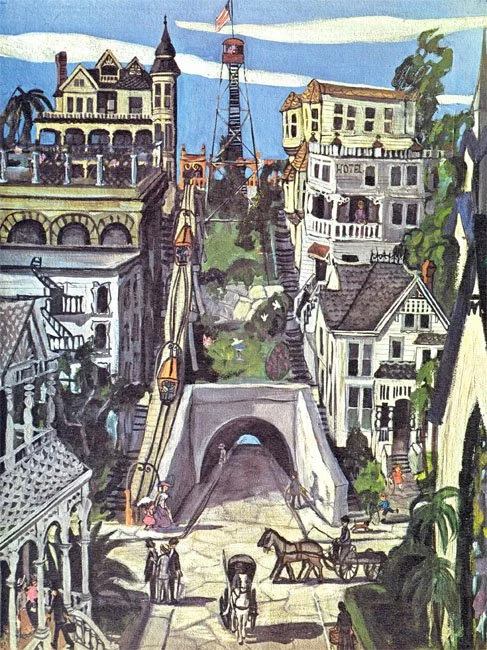
Leo Politi, Bunker Hill, circa 1960s
Throughout its history this touchstone for Angelenos has featured in books, songs, and films. It was once a part of the commute for many residents of Bunker Hill, a wealthy neighborhood in early Los Angeles. Purchased in 1867, the hill’s excellent views of the Los Angeles River and basin destined it to be subdivided and developed. Soon Victorian mansions sprang up and the hill became home to many of the city’s upper class residents. Those that could afford the fare used Angel’s Flight on a daily basis, others used the staircase that ran parallel to the funicular on the other side of the 3rd Street tunnel. Notable early residents of the hill included mayor and developer of Bunker Hill Prudent Beaudry, Lewis L. Bradbury Sr. (owner of the famous Bradbury building), and USC founder Judge Robert M. Widney.
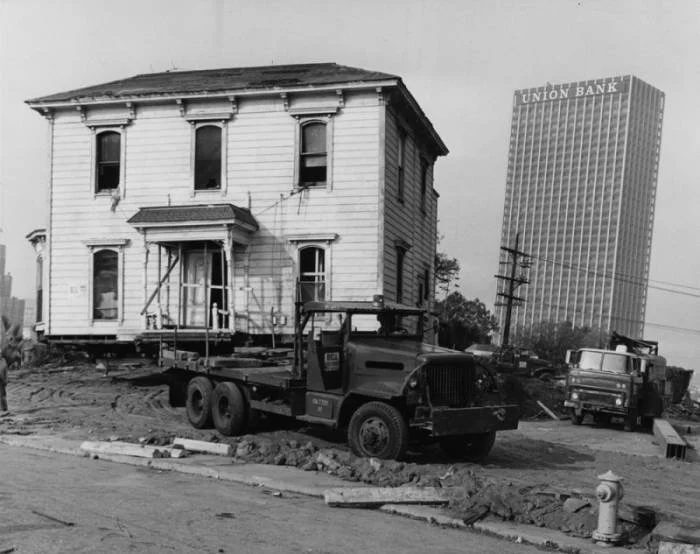
Moving the Salt Box residence from Bunker Hill, 1968, © LAPL
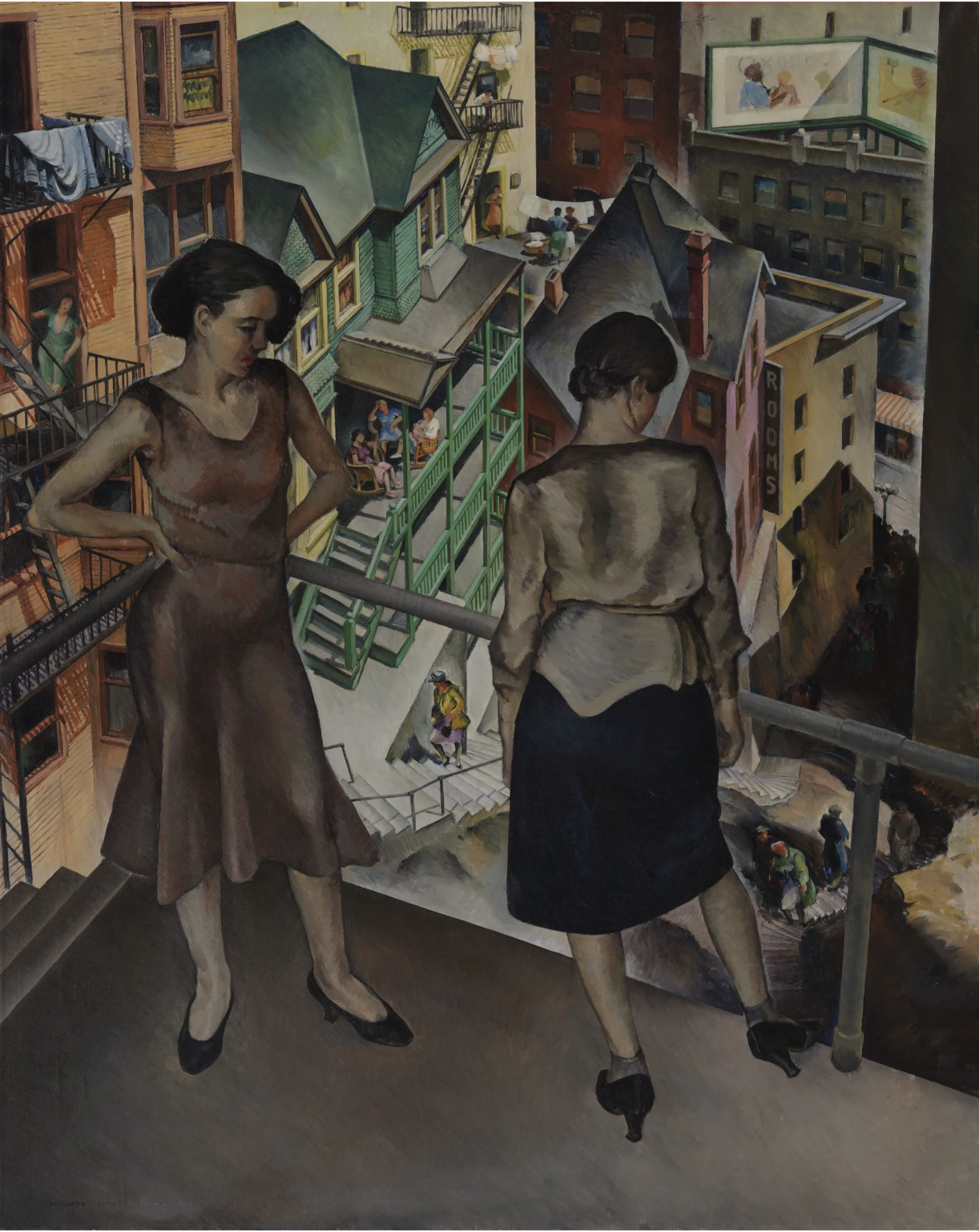
Bunker Hill retained its status as a glitzy neighborhood until the 1920s, when it was impacted by the railcar and freeway systems that took residents away from the area. Many moved out of downtown for places like Beverly Hills and by the 1930s, the large stately homes were subdivided into apartments and repurposed into boarding houses. What was once a home for the elite became the most densely populated neighborhood in Los Angeles, filled with pensioners and those in need of affordable housing. Urban Renewal finally came for the hill in the 1960s. Most of the mansions and buildings were razed and the hill redeveloped for skyscrapers. Angel’s Flight was dismantled and placed into storage.
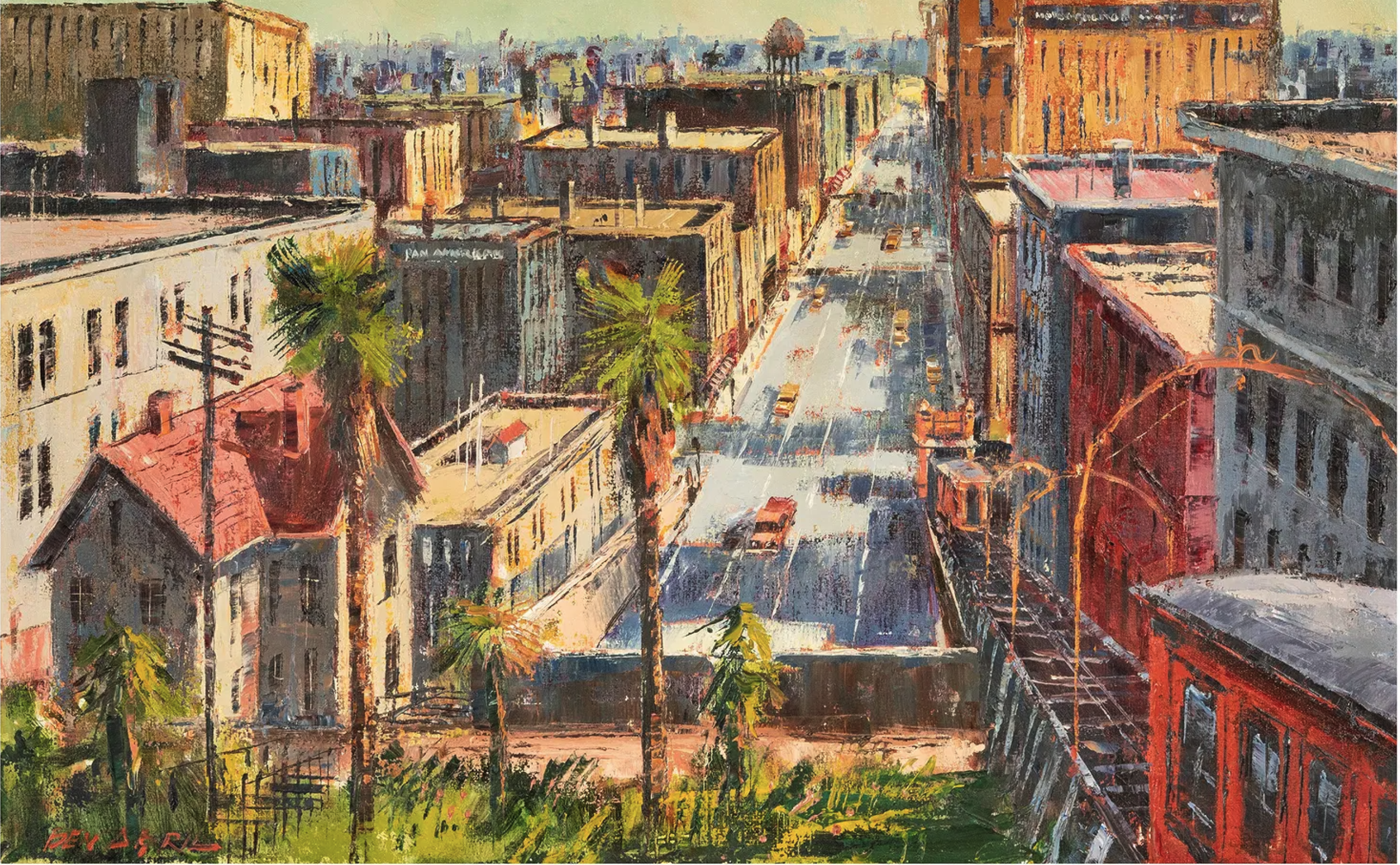
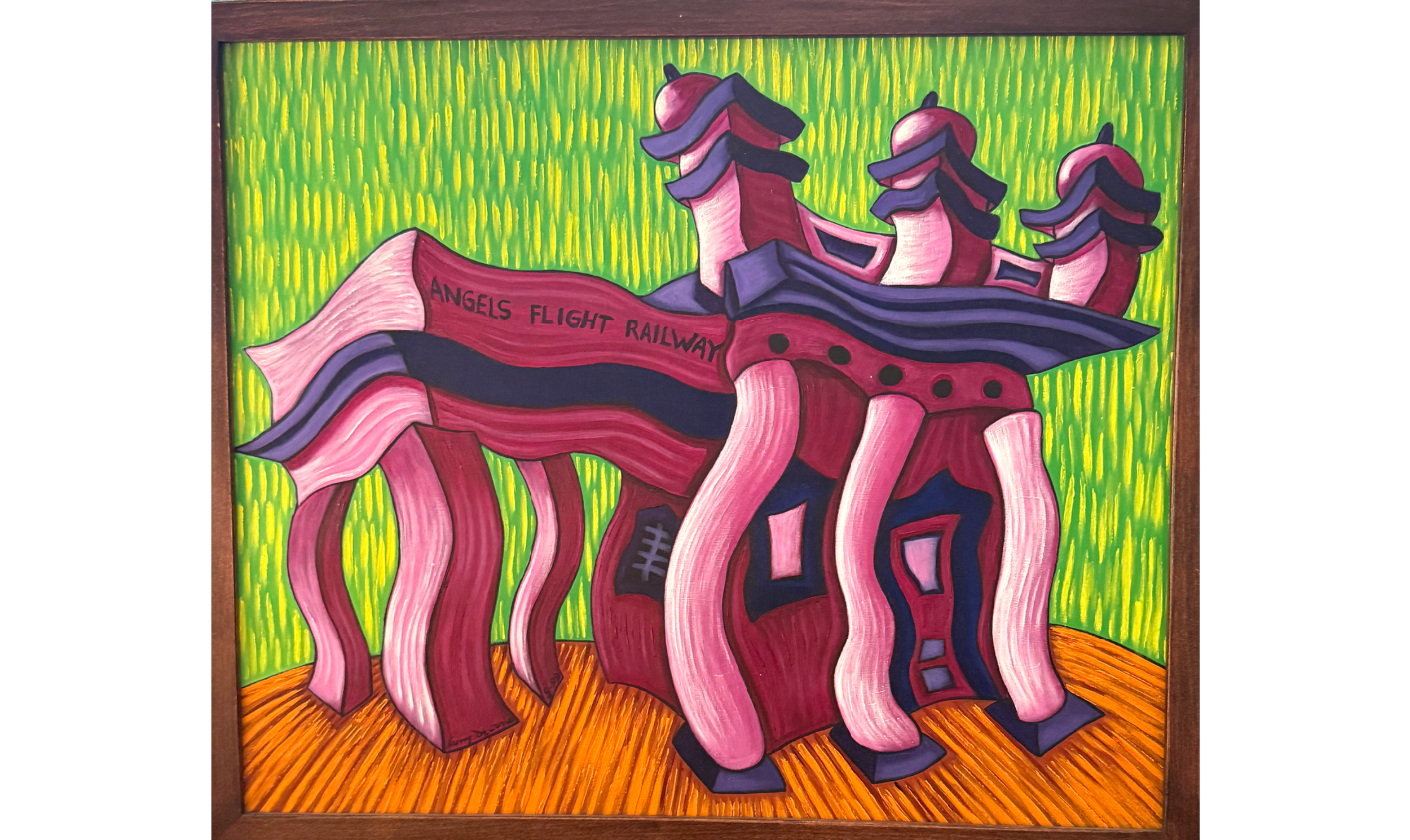
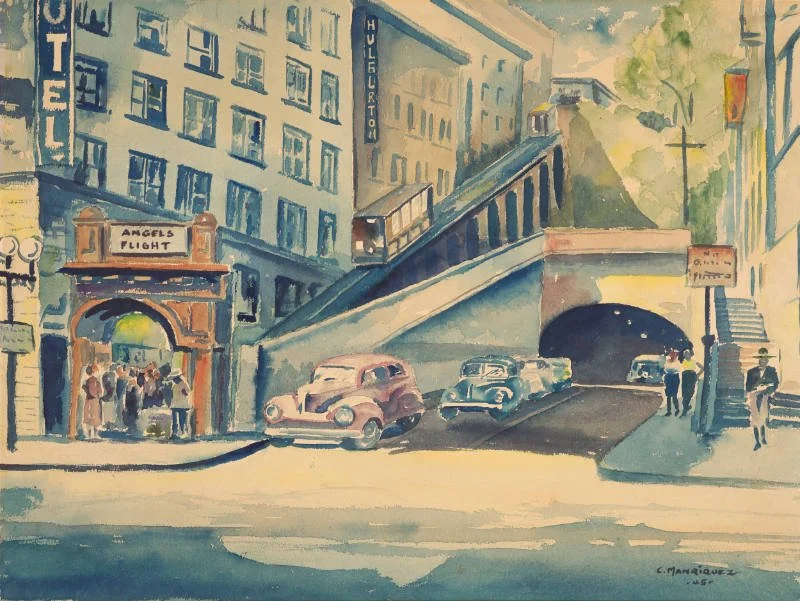
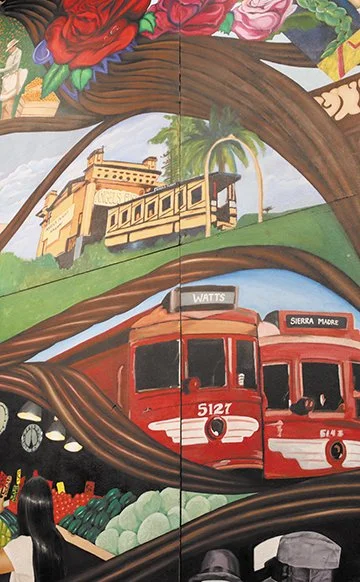
Since those the early days, artists have sought to capture Angel’s Flight in their work. Some have chosen to depict it as a fantasy of what once was, as an ideal of the present, as a reflection of what actually is, and as a surreal dream. While in no way comprehensive, we will take a survey of several works of the beloved railway.
Have something similar you would like us to look at? Be sure to view the categories we handle and contact us when you are ready.