
Haitian Art at the Olympics
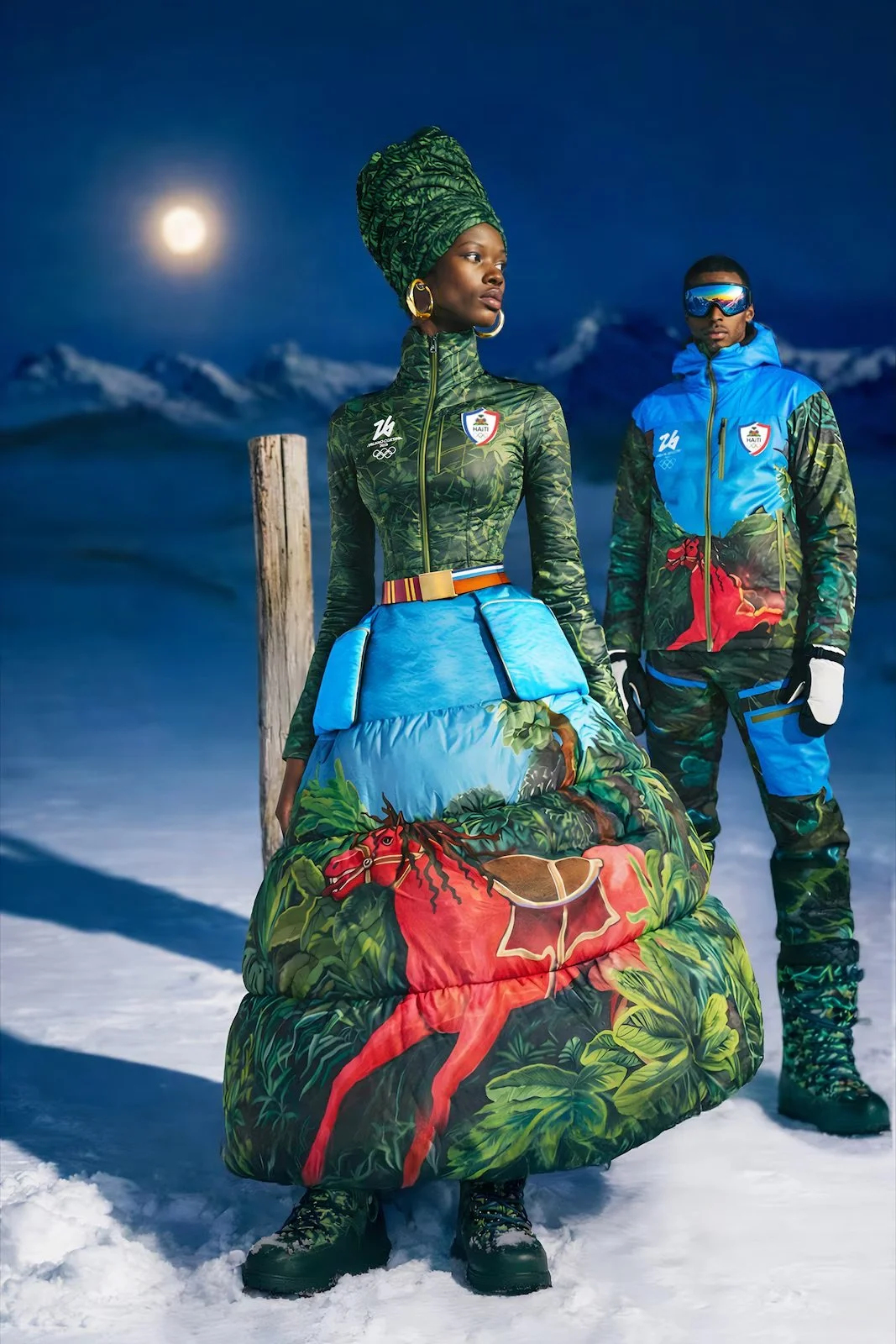
Haitian Winter Olympics kit designed by Stella Jean. Photo by Stella Jean
On viewing the opening ceremonies of the 2026 winter Olympics, I was struck by the beautiful design from Italian-Haitian designer Stella Jean for the Haitian team. Among the many things that makes Haitian art unique is its symbolism and reference or depiction of the history of the nation imbued in the art its people and diaspora produce. The designs for the team take that history and translate it into a new medium of fashion. I can’t think of another design that speaks more to the history and artistic tradition of a nation as well as this design. In an interview with Dazed, Jean discussed the garments and what they mean.
“In just a few metres of fabric, we have included so many symbols and meanings. Every single detail of the uniform has a specific social, cultural and historic meaning for Haiti. The tignon [the turban worn in the women’s uniform] references how colonisers would force enslaved women to cover their hair, so their beauty couldn’t compete with the coloniser’s wives. They were made to cover their beauty, but instead of accepting it, they turned it into a work of art. Haiti is a laboratory of resistance.
The Creole earrings, these were the only jewels that enslaved women were allowed to carry with them. The big pockets represent the baskets that the women of the market used – they are the symbols of the Haitian economy. Haiti is so much more than the crisis, it’s more than all the problems, and it’s more than the earthquake.”
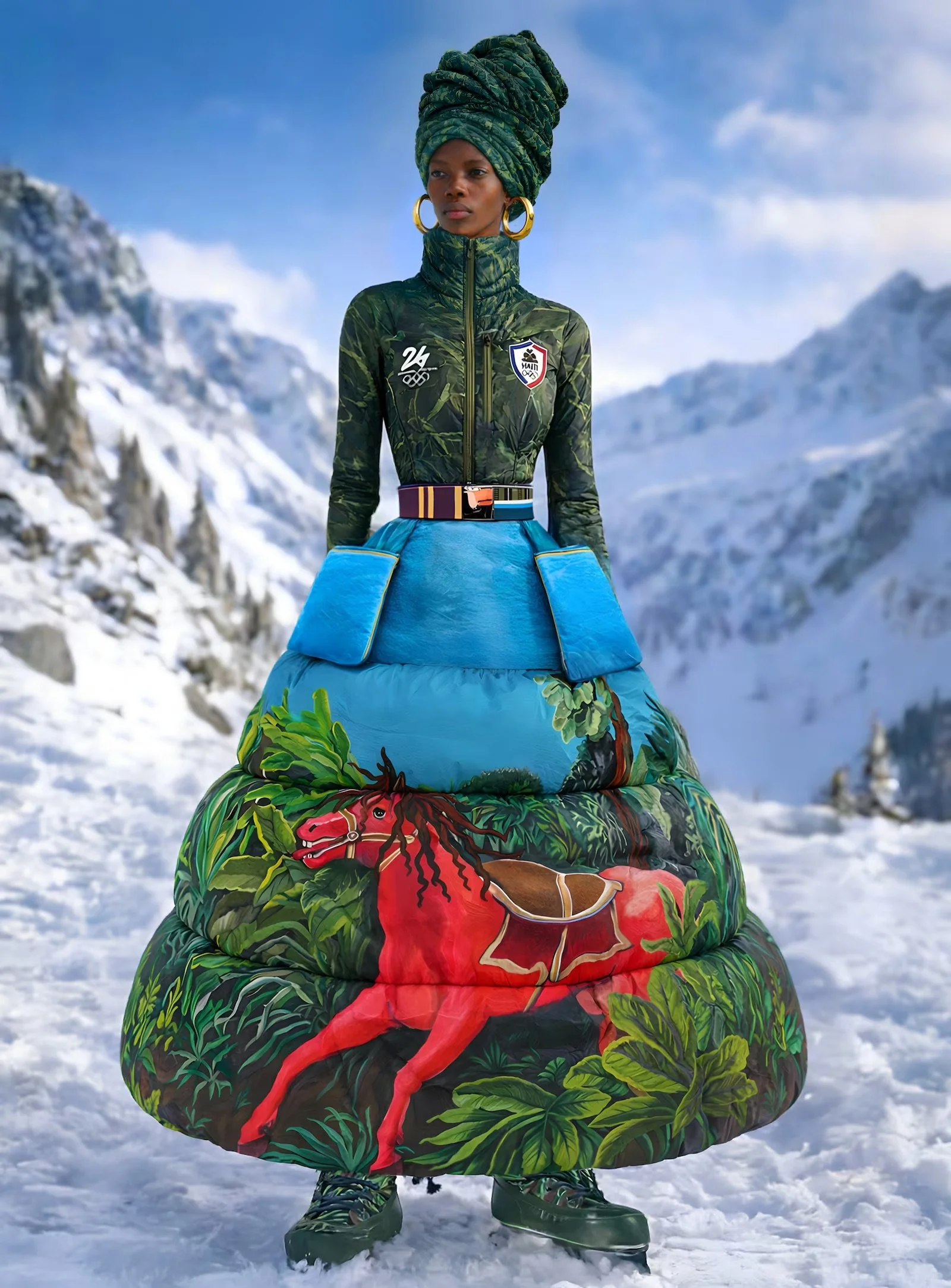
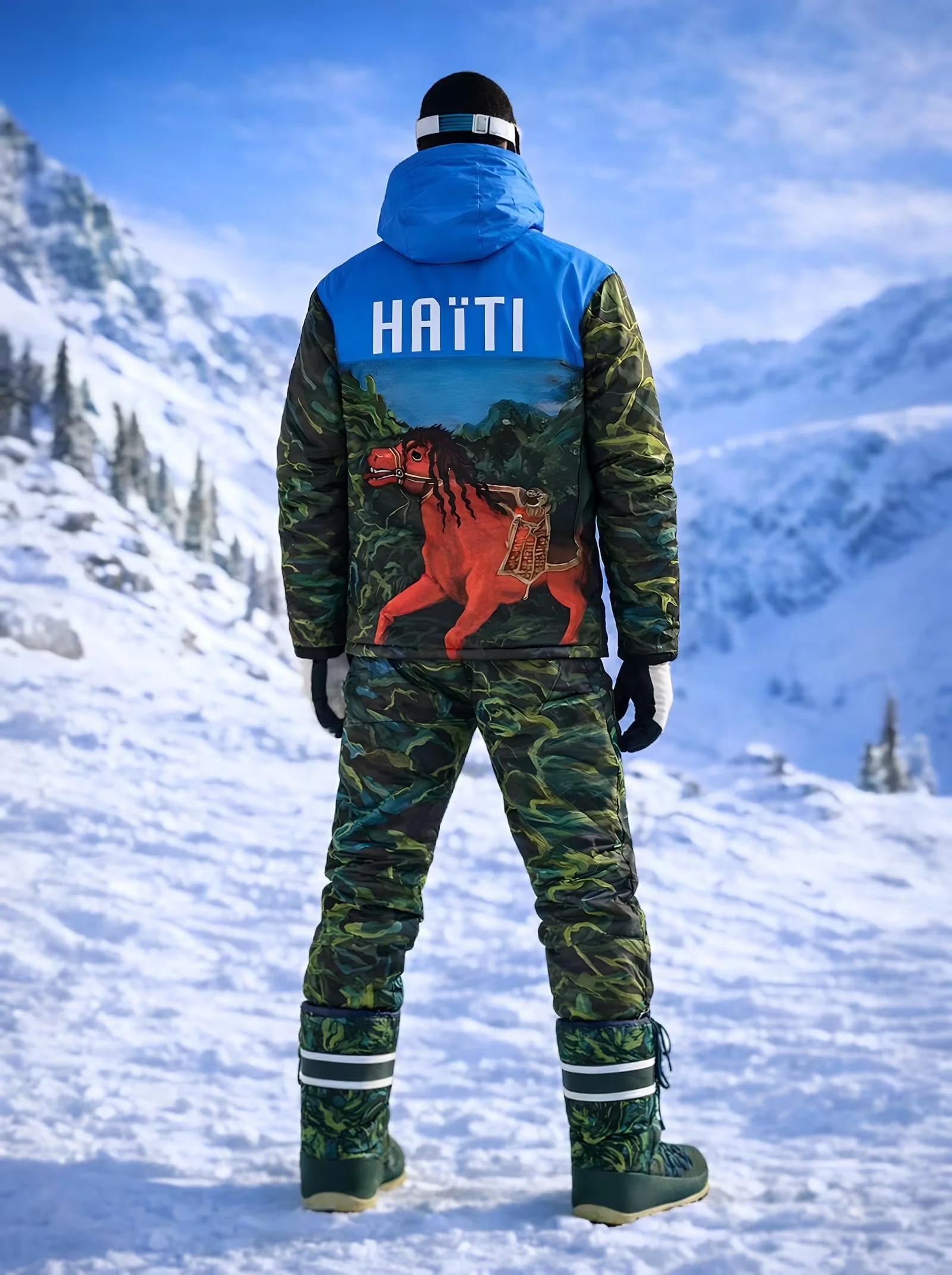

Photos by Stella Jean
The painting referenced by Jean in the creation of her uniforms is by Haitian-American artist Edouard Duval-Carrié. The original work depicts Haitian General Toussaint Loverture, the most well-known and prominent leader of the Haitian Revolution, on a charging horse in a lush landscape. Depicting political figures in uniforms is not allowed by the Olympic rules so the uniforms were hand painted at the 11th hour to instead feature the charging horse without its rider. But even in his absence, Loverture’s presence is felt in the power and majesty of the work. The sword in his hand transforms into a snake, a symbol in Vodou of Danbala, the spirit of peace, purity, and wisdom. The red horse and blue sky evoke two of the colors on the Haitian flag. Jean stated she selected this particular depiction of Loverture by Duval-Carrié for its representation of pride and perseverance.
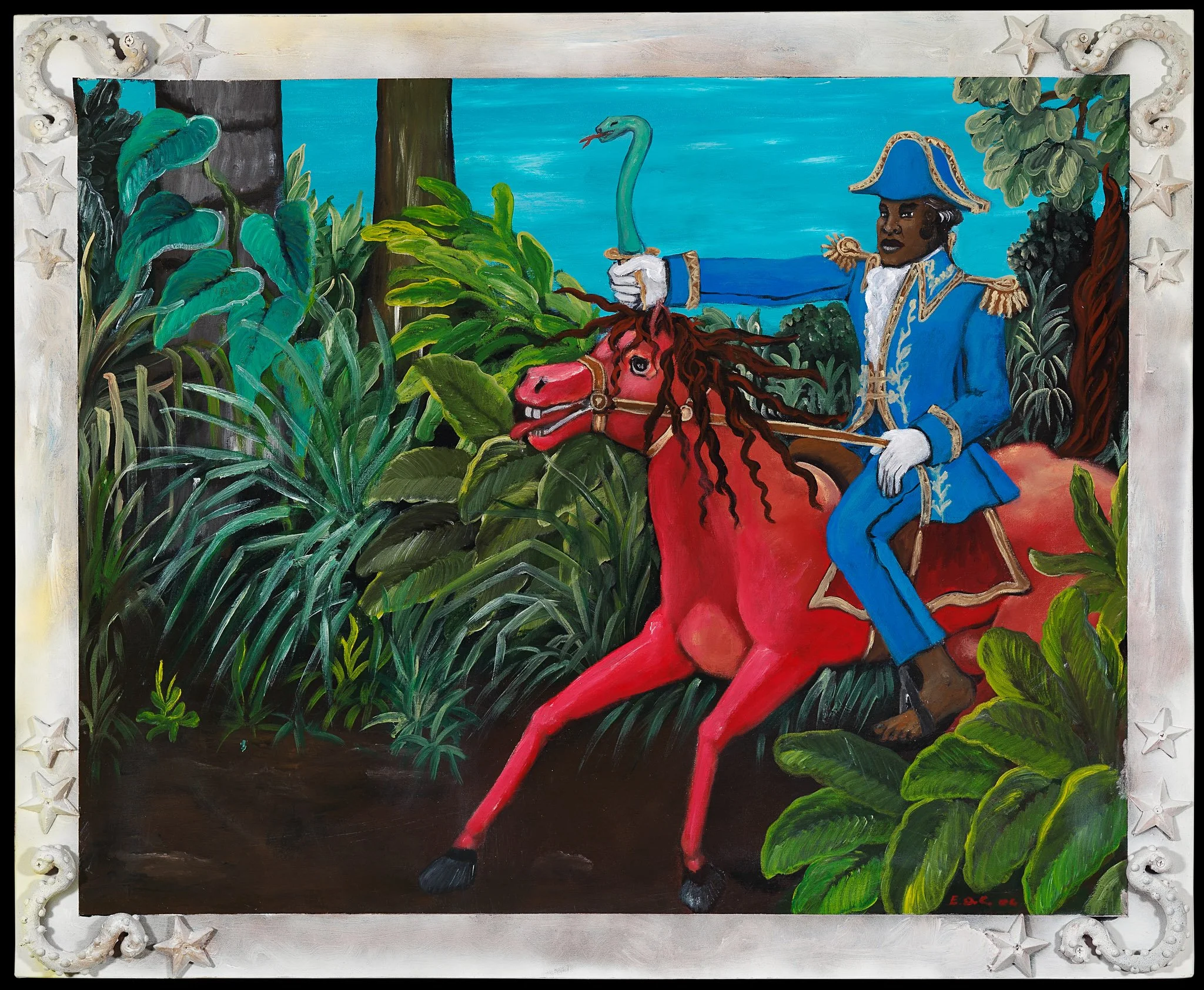
Edouard Duval-Carrié, Toussaint Louverture (2006). Image: © Edouard Duval-Carrié 2006, via Figge Art Museum.
Stella Jean also designed the Haitian uniforms for the 2024 Paris Olympics that featured the work of another Haitian Artist, Philippe Dodard, whose painting Passages is part of a tryptic dedicated to all the mothers of the world. This panel represents the treacherous journeys of Haitians across the Atlantic ocean. If Jean designs the uniforms for the 2028 Olympics, I hope she continues her use of great Haitian art in her designs.
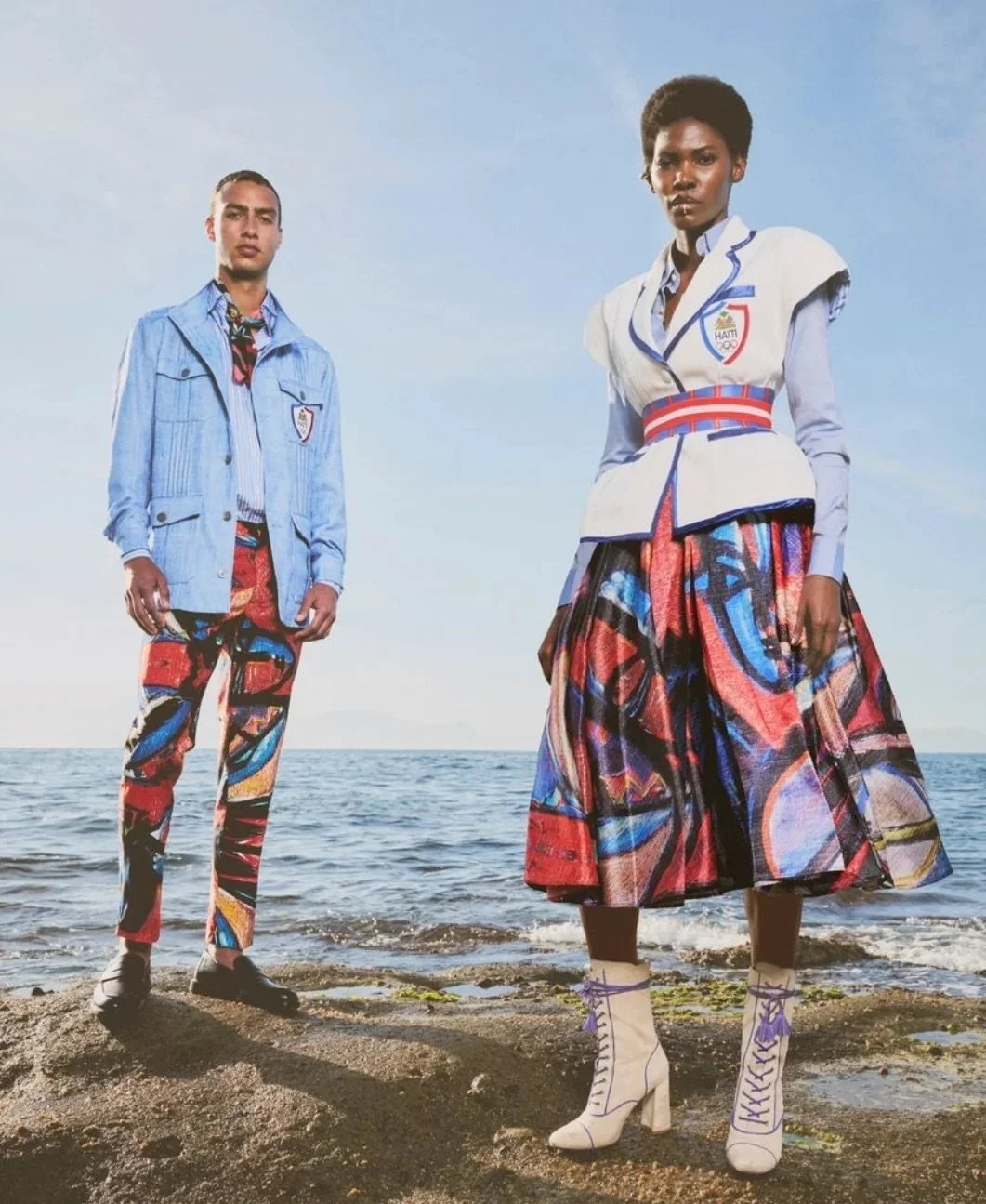
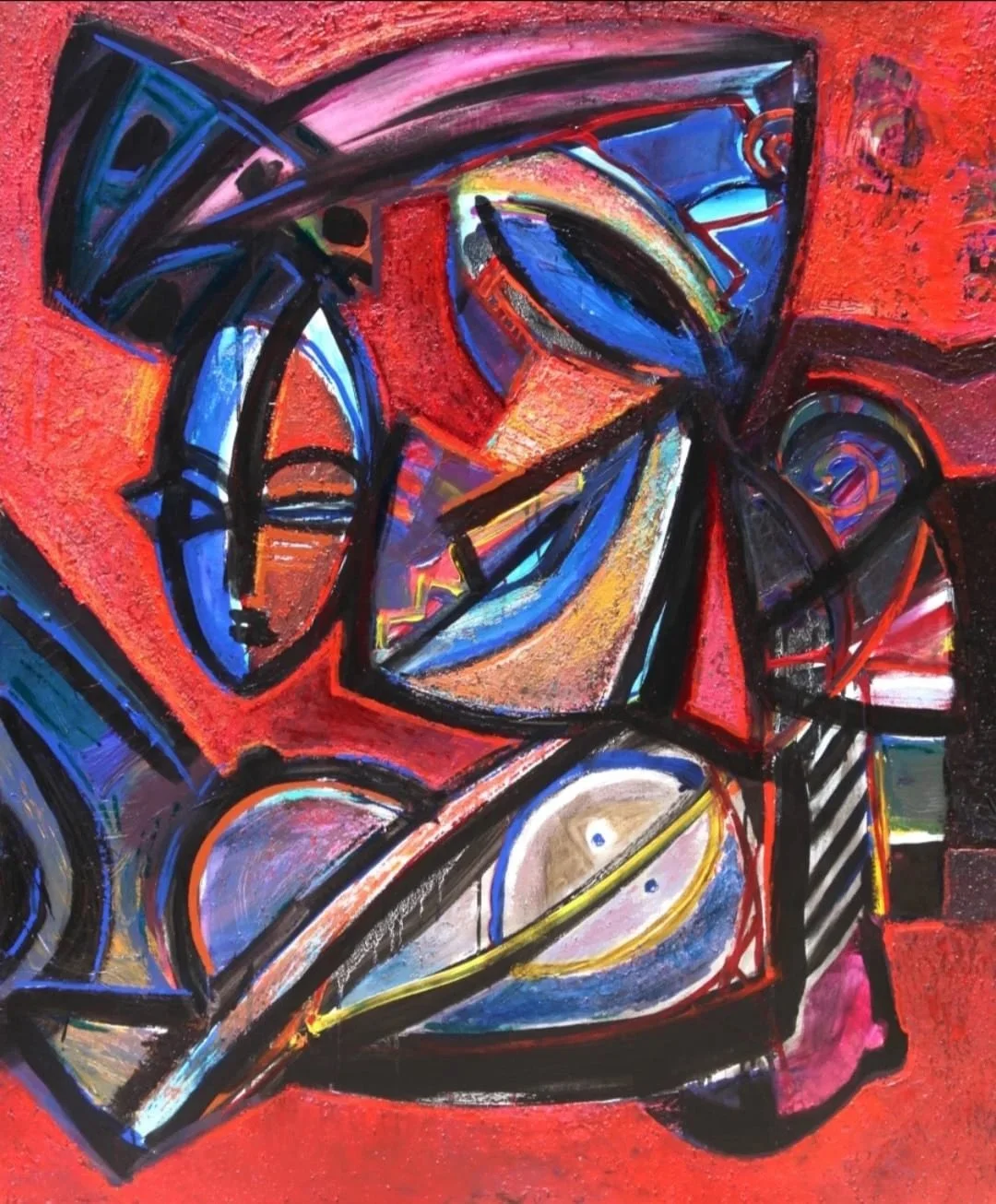
Design by Stella Jean; Passages by Philippe Dodard.
Do you have Haitian art you would like us to look at? Be sure to view the categories we handle and contact us when you are ready.